|
Witnessing Kyiv Under Attack This Morning
By Steve Richards
As I visit Ukraine during the holidays and premiere my new documentary for Bucha next Friday I thought I was just going to send out an update today of a post from earlier this year about how nice Kyiv was. All about how pleasant it is here; how everything is open and how nicely people seem to be getting along. Going to work, shopping, eating out. There's solid power, cell service, and wi-fi. Most of all it was about how Kyiv had obviously adjusted to this war. All of which is true. (Hello from Kyiv! Wish You Were Here) If anything, I didn’t realize just how well. Missile strikes woke up this city after a night filled with air raid sirens, which I largely slept through. I personally witnessed two explosions clearly visible from my room about a mile or so from the hotel. It totally freaked me out and it didn’t take me long to find the bomb shelter after ignoring so many air raid sirens in the past. This is my third visit since March 2022 and the first explosion I have witnessed personally. The first blast shortly before 8 AM got me out of my seat and to the window where I could see smoke rising from behind St. Sophia’s Cathedral a kilometer away. At that moment I collected myself enough to begin shooting footage from my 11th floor window overlooking Independence Square. The second explosion rocked the city just before I hit the record button fireball and all. If you watch the video clip you can still hear the explosion echoing through the city as I just missed filming the blast. The smoke plumes are clearly visible and in more than one spot. Fortunately injuries were few. Apparently, there was a “massive missile strike” this morning on targets all over Ukraine. Also reported is that all the missiles targeting Kyiv were intercepted. What I witnessed was debris falling to the ground. It would appear that unexploded war heads count as “debris”. It is impossible for Americans to relate to such things though we are used to things that would make Ukrainians shudder like mass shootings. The idea of a missile strike on the USA by Russia – or any other country - is unthinkable, except to nuclear war planners that started preparing for Russian ICBM strikes in the 1950’s. Those plans are still in effect as Russian warheads are still pointed at us. But what is most intriguing for a guy like me is how nonchalant Kyiv’s citizens are to such attacks. They are so used to it. Nothing closed down though the hotel staff did go to the bomb shelter for 30 minutes or so. But when it was over they all got back to work. The net effect on my day? A breakfast appointment got pushed back an hour or so due to traffic tie ups as did my appointment with the barber. By the time I left my hotel at lunchtime the smoke plumes were gone. That’s it. Like nothing happened. People about their business. As Julia said in Back to Bucha reflecting the spirit of all Ukrainians living through this war: “You really do get used to anything.”
0 Comments
 This is an update to Back to Bucha With the Airports Still Closed originally posted December 2022. By Steve Richards
As we approach the two-year anniversary of Russia’s full-scale invasion of Ukraine in February, I am kicking off Back to Bucha’s impact campaign with its Ukraine premiere on January 5th being the highlight - in Bucha! And just like my first trip to Bucha in April 2022 it will take several days of trains, planes, and automobiles to get there. That includes an overnight flight to Warsaw from Boston, a night in Warsaw, an overnight sleeper train to Kyiv, and then a car to Bucha. Which I am thrilled to have by the way. The first time had me hiking from Kyiv (no cars available) with the accompanying low-level threat of stepping on a land mine continually in the back of my mind. All in all, a three-day journey. I am halfway this morning and writing this post from the Hampton Inn by the Chopin Airport in Warsaw. I always look forward to this place. I use it to compress as I prepare to enter Ukraine, and again to decompress when I head back home. But as much as I enjoy coming here I’d rather fly over it. It makes me crazy that I can’t fly to Lviv, let alone Kyiv. It wasn’t so long ago before 2022 that it would have been routine. Even after the 2014 annexation of Crimea, the Maidan protests, and the appearance of little green men in the Donbas flights continued. Even after Putin approved the downing of the Malaysian Air flight that same year. Patriot missiles systems are in Ukraine now and have been for some time. These reduce the risk to commercial jets to an absolute minimum even if Russia were foolish enough to again target civilian aircraft and risk an escalation with NATO. Putin understands the impact of this economic blackmail – and it costs him next to nothing. It shouldn’t be allowed to continue especially given Russia’s weaknesses. Stick it to Putin while providing a huge boost in morale to Ukrainians and their supporters? The time is nigh for flights to resume. Ukraine’s economic recovery depends on it. A direct flight to Lviv and then a train to Kyiv? Sign me up for the first flight. Because as much as I look forward to going back to Bucha, I don’t look forward to getting there. 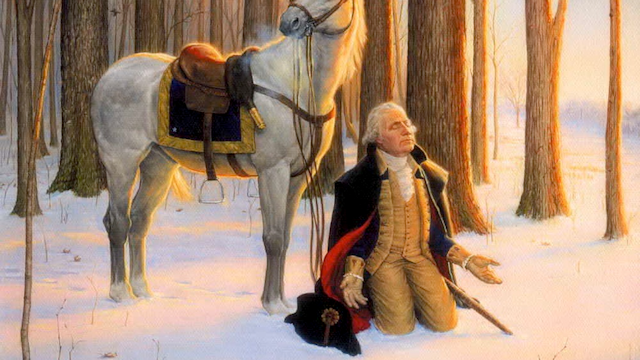 This week, some 246 years ago on December 19, 1777, General George Washington lead his battered 12,000-man army into their winter quarters having just failed to retake Philadelphia. The war for America’s independence was well into its third year going back to the first battles at Lexington and Concord, and Bunker Hill in the spring of 1775. It must have seemed long ago that his army had chased the English out of Boston and his crossing of the Delaware to beat the Hessians in Trenton. As he entered Valley Forge that Christmas Washington had no way to feed or adequately clothe his soldiers. They were alone. French assistance wouldn’t begin in earnest until the spring. That winter about 1,700 to 2,000 soldiers died from disease, possibly exacerbated by malnutrition. 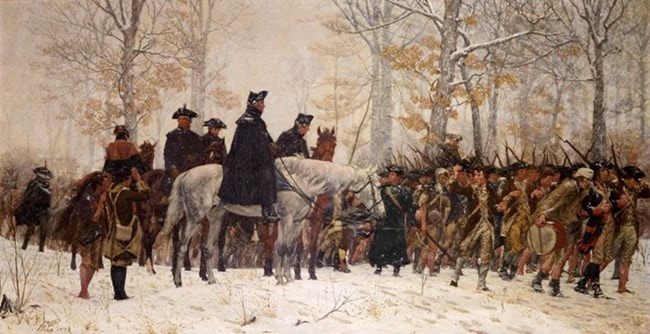 "To see men without clothes to cover their nakedness, without blankets to lay on, without shoes by which their marches might be traced by the blood from their feet, and almost as often without provisions as with; marching through frost and snow and at Christmas taking up their winter quarters within a day's march of the enemy, without a house or hut to cover them till they could be built, and submitting to it without a murmur is a mark of patience and obedience which in my opinion can scarce be paralleled."...George Washington Washington would spend most of the winter begging the U.S. Congress for just the minimum of what was needed. Sound familiar? I imagine Ukraine’s soldiers can relate to the soldiers of America’s Continental Army that winter as they enter their third winter since the full-scale invasion began in February 2022; both cold and uncertain as America’s Congress dithers. President Zelensky can surely relate to George Washington. Both of these great men were/are reduced to beggary. And glad to do so to keep their armies going. Washington continued with a dire warning to Congress: "…unless some great and capital change suddenly takes place in that line, this Army must inevitably be reduced to one or other of these three things: starve, dissolve, or disperse, in order to obtain subsistence in the best manner they can." Some years later, Lafayette recalled that "the unfortunate soldiers were in want of everything; they had neither coats, hats, shirts, nor shoes; their feet and legs froze till they had become almost black, and it was often necessary to amputate them." In the end Washington and his army survived the winter and came out of it a more disciplined and stronger force. They had used the winter to drill and become a more professional army that would take the British on in myriad battles leading to the decisive victory at Yorktown three years later. It would not have been possible without its key ally France. Lafayette was a general in the campaign and was in large part responsible for the French fleet that kept England’s at bay.  Valley Forge could have been the end of America’s quest for independence. Americans were weary of the war without even knowing about the severe privations their soldiers were experiencing as camp leaders did not want the English to know the state of America’s army.
America’s fight for independence lasted six years or so from the battles for Boston through Yorktown. If we infer a similar timeline for Ukraine beginning with Russia’s full-scale invasion in February 2022, we might expect a war that will go through 2027. Tragic, but not unexpected. If we want to look back even further we could compare the protests to the Stamp Act – including the Boston Tea Party and Massacre - beginning in 1763 with the Maidan Protests which began in 2013. To carry the timeline even further America’s final battles with its former empire were still decades to come with the War of 1812. Empires don't give up easily. Once again, Ukraine is holding a mirror to America’s own proud heritage as they fight on – no matter the sacrifices. Similarly, as they struggle on – with the help of key allies like the USA - they will obtain the fruits of their struggle just as we enjoy the fruits of America’s struggles at Valley Forge almost 250 years ago. 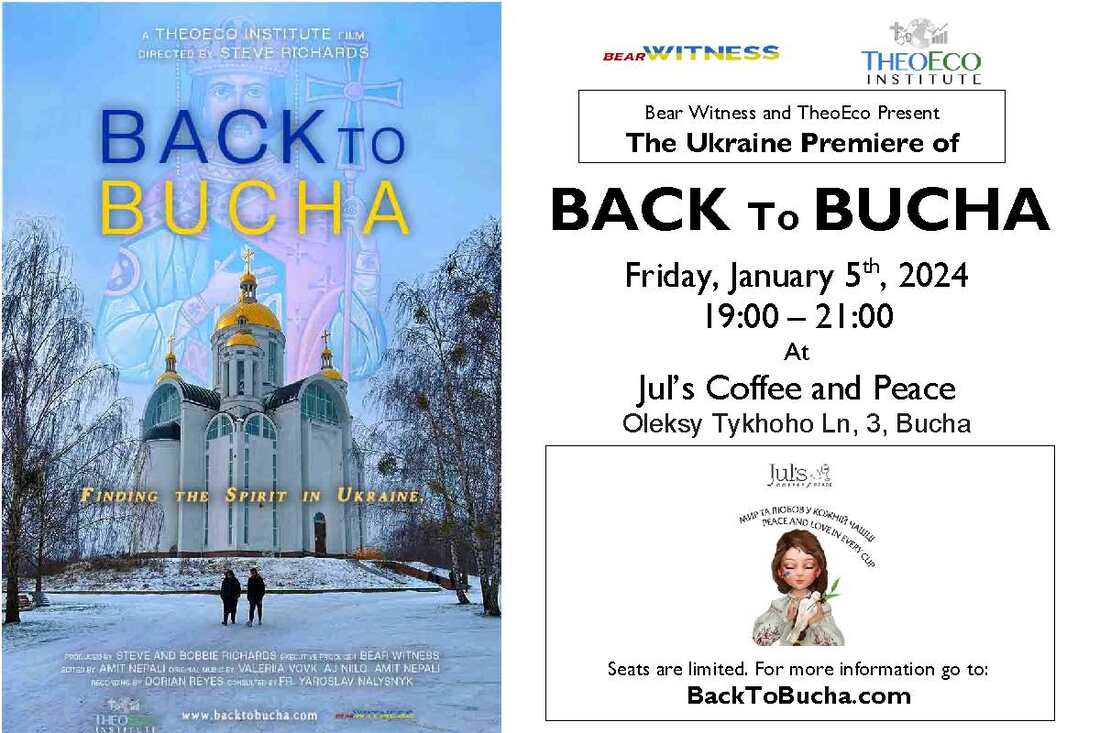 Heading Back to Ukraine to Screen the Film For the Film’s Stars
By Steve Richards As we approach the two-year anniversary of Putin’s invasion of Ukraine, I will be heading back to Bucha for the Ukraine premiere of Back to Bucha on the evening of Friday, January 5th, at the Hotel Park Viktoria. The hotel was featured in the original Trek to Bucha and we held its premiere in the hotel’s ballroom this past February 5th. We are also planning to livestream the event including Q&A with the film’s stars, allowing American audiences to join us that afternoon. Ukrainian captions for the 76-minute version are ready to go! This trip back to Ukraine is part of the launch of the film’s winter impact campaign which begins with a weekend of screenings at the Lake Worth Playhouse starting with its Florida premiere this coming Friday the 15th. Then off I go to Ukraine on Christmas Day in my ongoing efforts to help the Ukrainian cause, bringing a bit of support and reassurance from the USA that we are with them. I’m very much looking forward to revisiting old friends and seeing how they are doing during the holidays. I’ll also begin shooting the next film in the series and continue to dig into one of Putin’s favorite Orwellian justifications for the war: de-satanization. This particularly dangerous disinformation theme targeting America’s faithful just goes deeper and deeper in its impact, counting among its prey some of those in the highest echelons of American leadership. If you would like to support our winter campaign, please consider a donation by clicking here. Thanks! 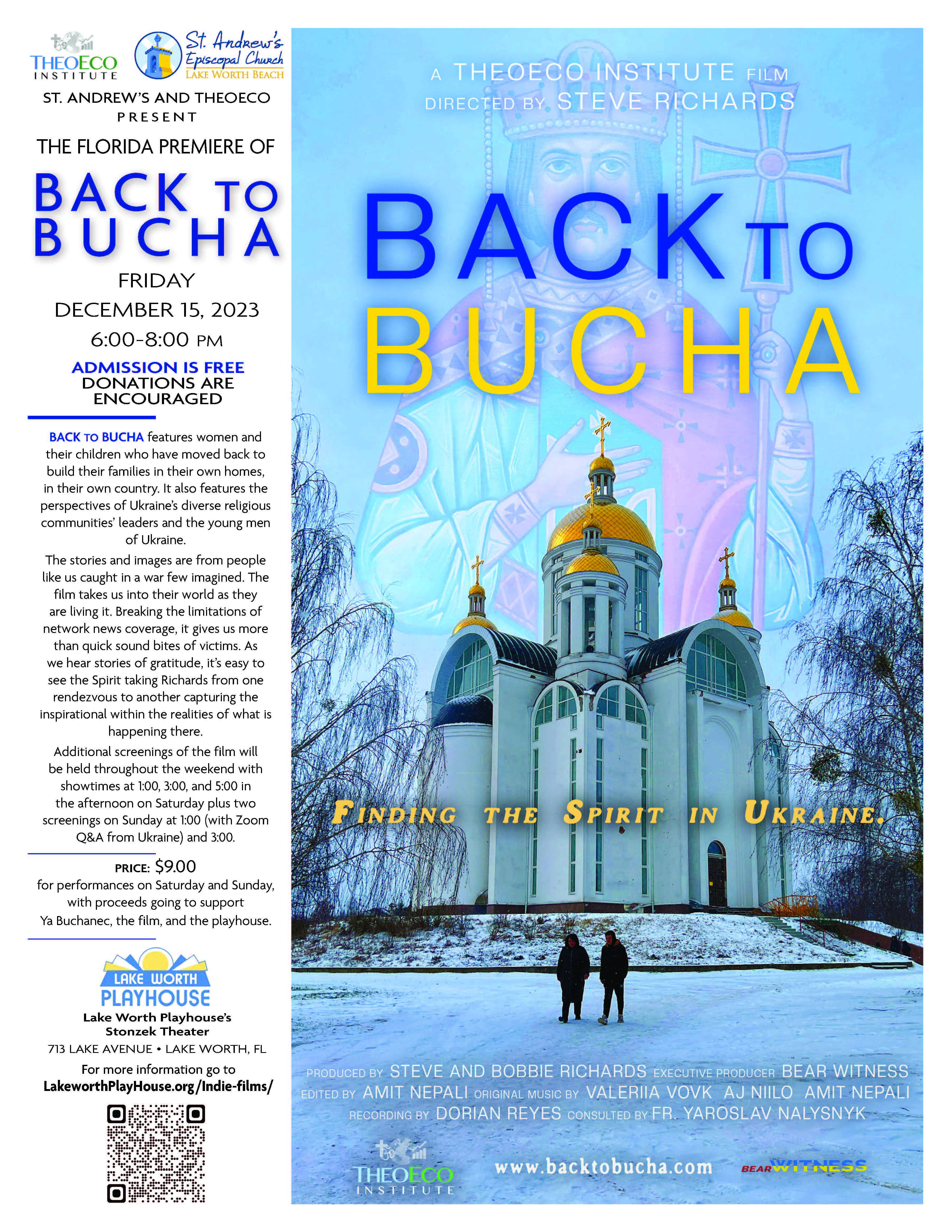 By Steve Richards
My first Ukraine documentary, Trek to Bucha, was shot in April 2022 during the full-scale invasion’s early days. In January 2023 I returned to film Back to Bucha, revisiting those I had met plus several ladies and moms in Kyiv and Bucha who had moved back with their families since the initial evacuations. Why? To build their lives and raise their children in their own homes, in their own country. The film also features Ukraine’s diverse Christian community and the young men of Ukraine. It captures the inspirational - and the realities - of their lives during wartime. The film officially premiered at the Claremont Opera House in New Hampshire on September 30, 2023 with screenings so far held from Austin to Boston, Florida to Pennsylvania. Audiences laugh and cry with the interviewees witnessing Ukraine’s Spirit throughout. Our goal? To take this uplifting film to Americans to raise awareness, entertain, and inspire - all while raising funds for Ukrainian causes. In particular, we want to shine a light on the misinformation and disinformation campaigns related to de-satanization and de-nazification assertions by Putin and Russian leaders including chief priest Kiril. From now through Election Day 2024 we plan to canvas the battleground states, reaching out to groups and venues of all kinds. For instance on December 15, 2023 we have a weekend of screenings for our Florida premiere at the Lake Worth Playhouse in conjunction with Lake Worth’s Episcopal church just five miles from Mar-a-Lago. These are our first theatrical screenings in which we bring together churches, theaters, and community organizations to support Ukraine. But first I head to Ukraine on Christmas Day to screen the film for the film’s stars and others as they enter another winter with a fragile energy grid sure to be targeted. This includes a gala Bucha Premiere on January 5th. before returning to the USA January 10th. We will also begin work on the next film as we document Ukraine’s Christmas and New Year festivities at this perilous time. Should make for some great footage! But it’s not just screenings. Our outreach includes email campaigns to members of the international press, politicians, and perhaps most importantly, church and community leaders throughout the USA. PBS and other broadcast outreach are also part of what we are working on. Our goal is to raise $9,500 over the coming weeks to cover the holiday screenings and the new video shoots. We’ve also budgeted $30,000 including $10,000 already incurred on our summer outreach tour to Evangelical and other churches in the South, Texas, and Northeast. This amounts to a total of $39,500 of which we’ve already raised just over $10,000. Lastly, part of the rationale for going to Ukraine during the holidays is to offer a bit of support and reassurance from friends in the USA. You are part of this group. Would you like to support these efforts? Simply donate using the link below. And remember, 50% of all screening revenues go to Ukrainian causes. Thank You! 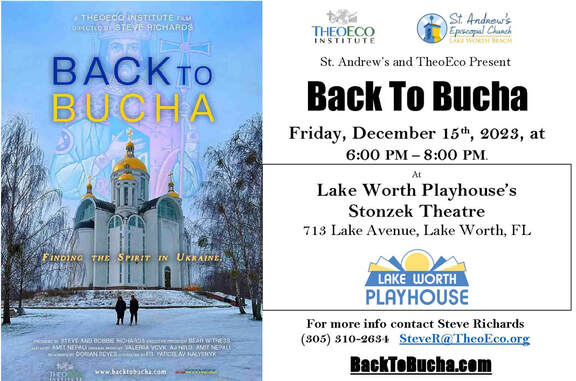 At the Lake Worth Playhouse - 6:00 PM on Friday, December 15, 2023 A couple weeks ago, we previewed Back to Bucha for a group of parishioners at St. Andrew’s Episcopal Church in Lake Worth Beach. It got a unanimous thumbs up!  So much so that Reverend Cori Olsen and I reached out to the Lake Worth Playhouse’s Stonzek Theatre just down the street to expand on the church’s screening capabilities and have arranged a weekend of screenings beginning with Back to Bucha’s Florida Premiere on Friday evening at 6:00 PM. The first of several such screenings being planned over the coming months, I am excited to have our Florida premiere in such a great venue where I will introduce the film and lead the Q&A afterwards. The film provides an uplifting view of people just like us dealing with Russia’s war - especially the moms just trying to raise their families in their own country, after returning home after the war’s early months. There is no charge to attend the premiere screening though donations are encouraged with net proceeds being shared with the Bucha based non-profit Ya Buchanec. 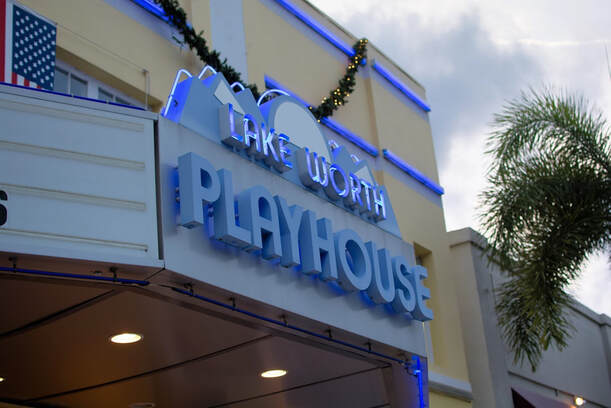 Additional screenings of the film will be held throughout the weekend with showtimes at 1:00, 3:00, and 5:00 in the afternoon on Saturday plus two screenings on Sunday at 1:00 and 3:00. Tickets are $9 with proceeds going to support Ya Buchanec, the film, and the playhouse. For more about the weekend screenings click here.
This is a great opportunity to support Ukraine the entire weekend. Come out and join us! Click here to register for the Premiere event. Delegation of Ukrainian Clergy Refuses to be Honored by the Nation’s Largest Episcopal Church11/5/2023 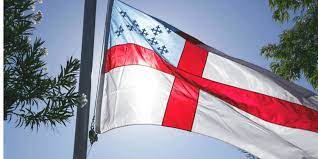 Episcopalians apparently are not conservative enough for Ukraine’s religions leaders.
On Friday I sent a post about a delegation of Ukrainian religious leaders coming to Houston. I was honored to be their guide to two services today, including a 6:00 PM service at St. Martin‘s Episcopal Church, the nation’s largest Episcopal parish. I sent Friday’s post after personally confirming the night before that the group would indeed be there. This after the group reached out to me two weeks ago and asked for my suggestions about a mega-church they could visit. The visit was approved by the group and St. Martin’s shortly thereafter. Much work has gone into St. Martin’s enthusiastic embrace of – and preparation for - the group’s visit, from the Rector down. The choir has even prepared a rendition of the Ukrainian National Anthem to be sung after a prayer for Ukraine, which was to be offered by the leader of the delegation. It would have been beautiful. Would have been because late yesterday I received a text that the delegation would not be attending this evening’s service after all. Why? Because the Episcopal church is not conservative enough; by which I think they mean the church supports a woman’s right to choose and allows female and LGBTQ+ priests. Apparently, it is unacceptable for these ecclesiastics to be seen praying with us. That one of America’s oldest mainline denominations – George Washington’s in fact - and such strong supporters of Ukraine – should have to endure such an insult is unbelievable to me. As a proud Episcopalian I immediately advised the group that I could not in good conscience continue to work with them. America’s Episcopalians have been dealing with issues like LGBTQ+ clergy for many years, and many of the tens of millions worldwide in the Anglican Communion – of which the Episcopal Church is part - disagree with us on these issues. That’s fine. Disagreement and infighting is part of the evolution of the Body of Christ I suppose. Ukraine’s religious community will find itself changing as well if they are truly committed to religious freedoms and really want to join the West. If not, they should consider returning their gaze to Russia. Putin and Kiril are anxiously awaiting them and will see this episode as a victory. I am deeply sorry that such a travesty by this disinformed pharisaic group, sent here to garner support from America’s politicians, has occurred. They should have stayed home. They obviously do not understand where they are this Sunday. We live in a country where religious and personal liberties are bedrock, which includes gay marriage and LGBTQ+ inclusion. That includes going to church and the right to be gay. The Episcopal Church opens its doors to everyone – and that includes seminaries and the priesthood. We are proud of our stance and consider it the truest expression of Christ’s Love for all. The dynamism in America’s churches has allowed denominations to adapt over the years, but not without much pain and many schisms, including within the Episcopal Church. This dynamism is happening right now throughout the USA’s churches. Turns out even conservatives have gay kids. Ukrainians too. Judging from the UCCRO collection of representatives sent here they are just beginning this process. I wish them luck and intend to document the process. I will be at the service this evening at St. Martin’s sitting in the pews reserved for the Ukrainian contingent. I can only offer my deepest apologies for representing the group to begin with and for their atrociously bad manners. Surely their mothers taught them better. Lesson learned. I still hope the delegation decides to come in the end. Or at least a Nicodemus or two. Hopefully, the choir will still sing the Shche ne vmerla Ukraina. Because in the end, we can’t judge Ukraine’s people from this episode. Ukraine still deserves our support – even if their religious leaders don’t represent them very well. God bless Ukraine.  Members of the Ukrainian Council of Churches and Religious Organizations (UCCRO) will be attending services in Houston on Sunday, November 5th. A few weeks ago, I heard about a group of Ukrainian clergy coming to the USA, which I thought was great knowing as I do just how much American and Ukrainian Christians - and other faiths – have in common. So, I was particularly excited when the group’s sponsor Razom for Ukraine reached out to me to see if I could recommend a mega-church in Houston that the group might be able to connect with. 15 members of UCCRO, including leaders from the Jewish, Muslim, Crimean Tatar, and Orthodox Church religious communities, will join the trip along with Evangelicals, Catholics, and others. I sent them three churches I had recently visited on Back to Bucha’s Texas Scouting Tour: Lo and behold the group said that they would like to visit all three! In the end though time allows for just two including a morning service at Northside Christian and an evening service at St. Martin’s. Together with the tremendous reception organized at Ecclesia’s West Side Campus last night the delegation will see a wonderful slice of what Houston’s Christian community offers its faithful. It will be the finale of a whirlwind trip for the group which started Oct. 28th in Washington, DC. 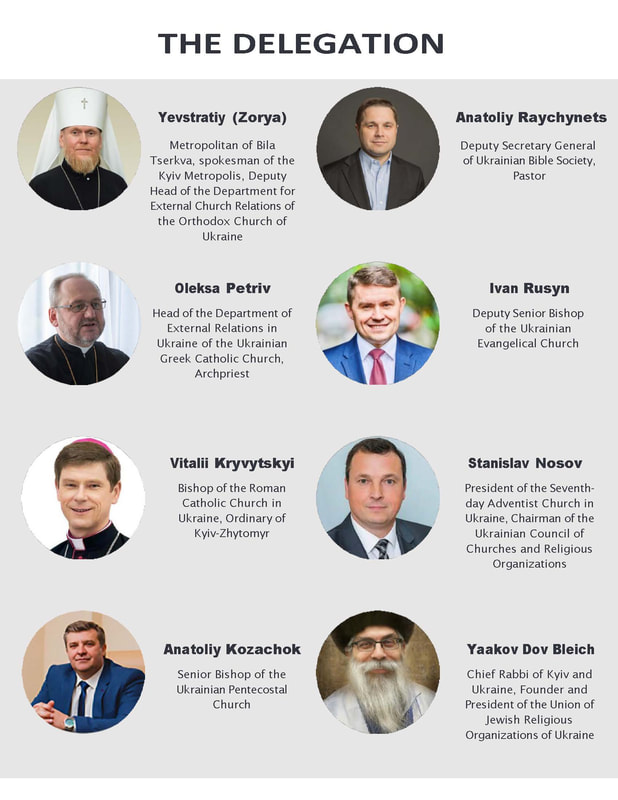 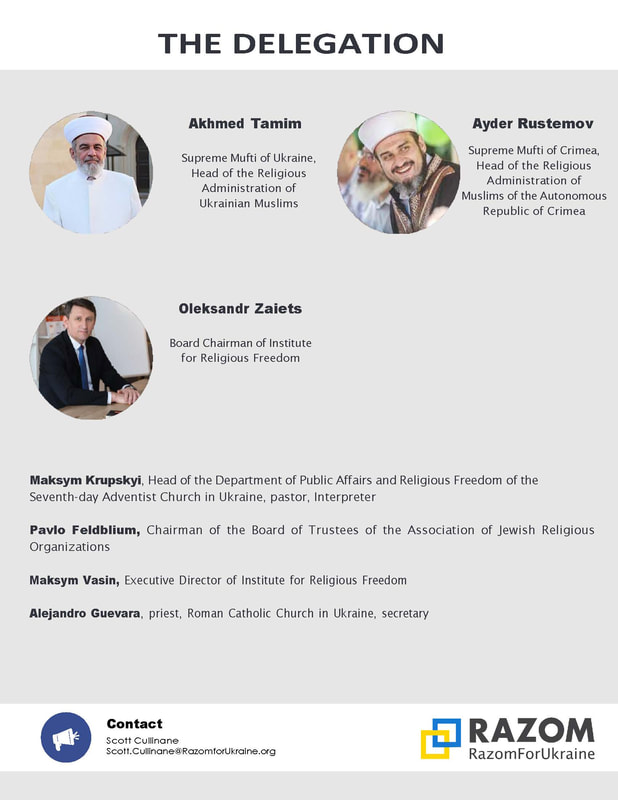 Here is a list of the delegates:
I am honored and excited to be acting as their guide on the 5th! “The Ukrainian Council of Churches and Religious Organizations (UCCRO) was established in 1996 as an interdenominational institution, aiming to unite the efforts of various denominations to focus on the spiritual revival of Ukraine, coordination of interconfessional dialogue in Ukraine and abroad, participation in a legislative process on church-state issues, and the implementation of comprehensive charitable actions. Today, it is one of the largest non-governmental institutions in Ukraine, representing over 95% of all religious communities in Ukraine. UCCRO works closely with the Ukrainian government, civil society, and international organizations, including on the issues pertaining to Russia’s full-scale invasion of Ukraine.” Click here for the press release.

Ukraine for Christmas? Let’s go!
Sounds like an unusual place for a non-Ukrainian to go for the holidays but I can’t wait to join and document this critical time for Ukraine – especially as ongoing disinformation about the state of Christianity in Ukraine continues. This will be my third Ukraine trek since the full-scale invasion in February 2022 and I expect to see even more of the moms and children featured in Back to Bucha at the December screenings TBD. As we are seeing at our USA screenings, moms, kids, dads, and grandparents alike are being moved by those in the film. This includes 10-year-old Lily at the October 1st Boston screening at St. Andrew’s who stood up and recited a poem about Ukraine to the packed audience – and then joined in the Q&A to ask how she could help and connect with kids in Bucha. Though Lily stole the show I was honored to be joined by Oleksandra Romantsova after the film for an address and panel discussion with two stars from the film. She is the Executive Director of the Ukrainian Center for Civil Liberties and was awarded the 2022 Nobel Peace Prize. Liubymyr Janov, the head of Bucha’s Youth Council and Fr. Roman Nebozhuk, Archpriest of the Ukrainian Catholic Cathedral in Kyiv, joined us live from Ukraine via Zoom. We are grateful to all those who helped to host this event, prepare food, supply desserts and clean. Special thanks are extended to Vsevelod Petriv, Jane Yavarow, and Maria Saxe. To top it all off the event began with a wonderful performance by Valeriia Vovk whose music was used in the documentary. 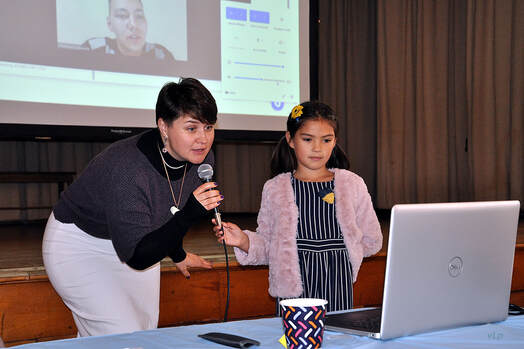
Oleksandra Romantsova and Lily
Back to Bucha’s fall tour actually began the previous day at the beautiful Claremont Opera House on a very big screen! We premiered the new 30-minute version of the film at the “Stand With Ukraine” event put together by the Sugar River Rotary. Valeriia also performed, this time on a grand piano on a grand stage – an extraordinary scene. The new shorter version of the film really gets to the essence of the documentary – moms and kids coming back home. Once again we are grateful to all those who helped host this event, serve food, hold raffles, clean, etc. A very special thanks to Sophia Sushailo and Sugar River Rotary President Charlene Lovett for treating us so well.
Donations were also record setting for one of our screening events with proceeds going to Ya Buchanec for an after-school center that was robbed by the Russian military during Bucha’s occupation.
While I’m not sure we can top these New England screenings, I am excited to screen the film for our friends in Ukraine as we begin filming the third film in our Trek to Bucha trilogy. This one focused on the truth about Christianity and religious freedom in Ukraine.  Executive director of Ukraine’s Center for Civil Liberties, 2022 Nobel Peace Prize recipient, she will also participate in the Q&A after the film. We are thrilled to have her. The United Nations Development Programme posted this about her earlier this spring: “Appalled by the brutal dispersal by riot police at a peaceful student camp in Kyiv in late 2013, Romantsova realized she wanted more than just to attend protest rallies. As a volunteer, she joined the Center for Civil Liberties, where she first learned about human rights. Later, she became its executive director - and a world-renowned human rights advocate. From call-center to Nobel Peace Prize: Meet human rights activist Oleksandra Romantsova | United Nations Development Programme (undp.org) The Center for Civil Liberties is currently working on documenting war crimes in Ukraine. They are the first Ukrainian organization or person to be bestowed this prestigious award; and Sasha personally has been to Bucha on behalf of CCL and their war crime documentation activities. Here’s the tentative schedule for the afternoon program:
Ukrainian cuisine will be available for purchase. This screening will also feature newly installed Ukrainian captions. This is a donation driven event. Admission is free though donations are encouraged. Space is limited so please register and donate by clicking here. |
Archives
April 2024
Categories
All
|

 RSS Feed
TheoEco Institute is a 501(c)(3) nonprofit organization. Contributions to TheoEco in the United States are tax exempt to the extent provided by law.