
Introducing our new Beyond Bucha campaign as we gear up for filming in Ukraine this summer.
Titled "Beyond Bucha – From Churches to the Front," this installment marks the third chapter in the Trek to Bucha documentary series, continuing to illuminate the inspiring resilience of Ukraine's spirit. Expanding beyond the previous locales of Lviv, Kyiv, and Bucha, this journey will now encompass Vinnytsia, Odessa, Kherson, Zaporizhzhia, Kharkiv, and the Avdiivka/Chasiv Yar regions, contingent upon prevailing conditions. The film aims to leverage the momentum generated by the promotional campaign of "Back to Bucha," fostering a deeper understanding between America and its battling Ukrainian ally. Throughout the upcoming summer shoots, our focus will be on embedding with chaplains to capture Ukraine's heroes in prayer, while also shedding light on misinformation surrounding the state of religious groups in the country. To support our endeavors, we're launching a comprehensive initiative, including a new deck, webpage, and reel to provide insight into our mission. The new deck provides a quick presentation (4 slides) of the Beyond Bucha project and what we are striving for including what the film is about, its potential impact, ways to join the cause, and clips from the Beyond Bucha shoot from the recent holiday season. Click here to take a look. 
The new 5-minute video reel blends footage from the original Trek to Bucha (filmed in April 2022), Back to Bucha (filmed in January 2023), and glimpses from our recent Beyond Bucha shoots during the 2023/2024 holiday season. Click here to take a look.
0 Comments
 On this Memorial Day, these words of American founding father Thomas Paine seem written for Ukrainians today: “THESE are the times that try men's souls… Tyranny, like hell, is not easily conquered; yet we have this consolation with us, that the harder the conflict, the more glorious the triumph. What we obtain too cheap, we esteem too lightly: it is dearness only that gives everything its value.” The American Crisis, No. 1, December 23, 1776 A year or so later, Paine would write another poignant piece seemingly directed at Putin: "TO argue with a man who has renounced the use and authority of reason, and whose philosophy consists in holding humanity in contempt, is like administering medicine to the dead, or endeavoring to convert an atheist by scripture. Enjoy, sir, your insensibility of feeling and reflecting. It is the prerogative of animals. And no man will envy you these honors, in which a savage only can be your rival and a bear your master." The American Crisis, No. 5, March 21, 1778 It was actually written to General William Howe, Commander-in-Chief of the British Army, while Washington and his troops were enduring the winter at Valley Forge.  Thomas Paine On this Memorial Day, we can look back to May 1778, when Washington was preparing his army to march out of Valley Forge a better trained, better supplied, and more confident force. Washington had managed to get what he needed out of America’s Congress, and France had become an official ally. As in Ukraine today, much help was coming—soon.
That winter was the toughest time for Washington, his army, and America’s future. But the army emerged stronger for it, having used the winter to resupply and train. Similarly, the Ukrainian armed forces will use the coming months to resupply and train. Like France in the spring of 1778, America is no longer on the fence, which should give great hope to Ukrainian soldiers as they begin to be resupplied by steadfast allies. However, if America’s war teaches us anything, the war in Ukraine is far from over. After Valley Forge, the war with Britain continued for another three years until the Battle of Yorktown—and another three decades before the British were defeated in the War of 1812. It would be great if victory in Ukraine came sooner, but there are few signs this will happen, especially with the West trying to avoid even a small nuclear exchange, effectively forcing Ukraine to fight with one hand tied behind its back. Hopefully, Ukrainians can find hope and renewed determination at this moment, as their liberties hang in the balance just as ours did 246 years ago. I’m confident they will. It’s in the Spirit of Ukraine. 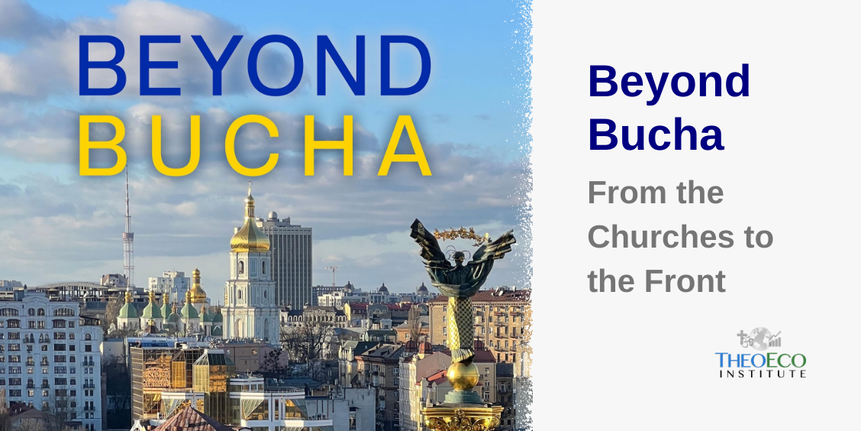 The new feature length documentary is already in production and set for release in early 2025. By Steve Richards I am excited to unveil the new poster and webpage for Beyond Bucha - From the Churches to the Front, the third film in the Trek to Bucha series. The original film Trek to Bucha, was shot in April 2022, just a month after Russia’s full-scale invasion shocked Ukraine – and the world. People were beginning to move back to Kyiv and Bucha after Ukraine’s early victory in the Battle of Kyiv and Russia’s retreat from Bucha. In it we meet resolute citizens – coffee shop workers, a DJ, college students, an insurance agent, hotelier, civil engineer, etc. – all forever changed and thirsting for a return to normalcy. 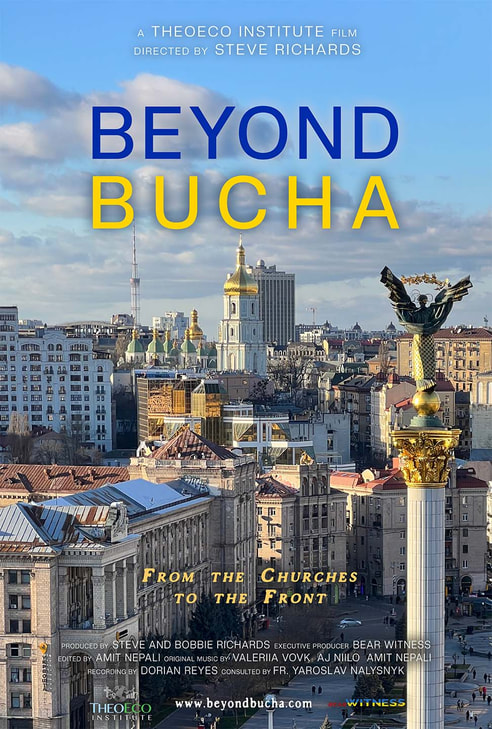 Beyond Bucha's Poster In January 2023 I returned to film Back to Bucha, revisiting those I met before plus women and moms who moved back to raise their children, in their own homes, in their own country. The film also features Ukraine’s diverse Christian community and a cross section of young men who were beginning to be called up. On Christmas Day 2023 I went back again to document the 2023/2024 holiday season. Much of this footage will be included in the new film and several clips are available on BeyondBucha.com. To finish Beyond Bucha a production tour is being planned for the summer of 2024 and will go beyond Warsaw, Lviv, Kyiv, and Bucha to include:
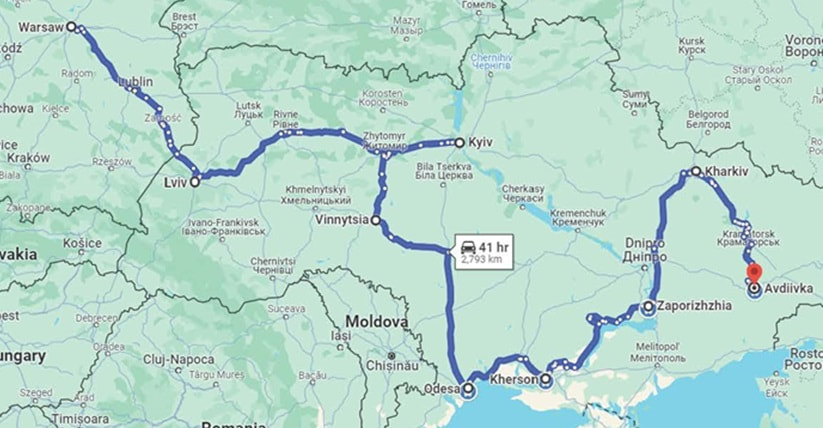 Over the coming weeks we will provide more information as we prepare to revisit Ukraine and finish shooting the film. By continuing to document the violence targeted upon Ukraine’s citizens and religious communities, we expect to continue to play a part in bringing their stories to light.
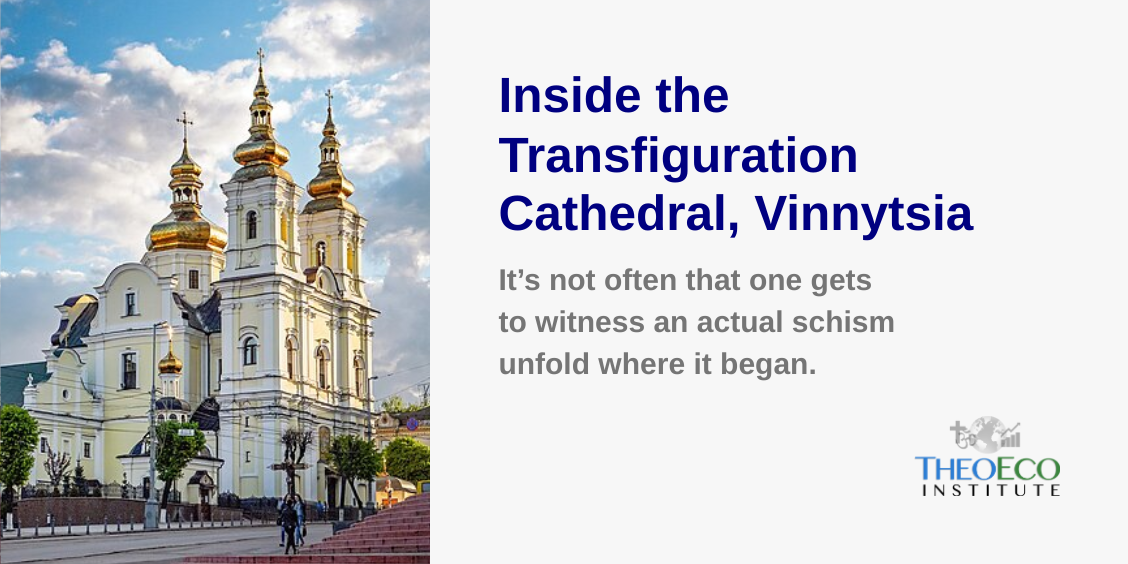 It’s not often that one gets to witness an actual schism unfold where it began. In this short video we get a quick tour of the Transfiguration Cathedral in Vinnytsia from Archdeacon Demetrios of the Ukrainian Orthodox Church. This includes a visit to the undercroft which doubles as a bomb shelter, well as the meditation garden which has been used for centuries by monks and priests. Originally a Dominican monastery when founded in 1630, to say it has a fascinating history would be an understatement. The deacon begins with an explanation that this is the first church in Ukraine that transferred from the Moscow Patriarchate to the new Orthodox Church of Ukraine. A schism brought on by the war and is at the center of the conflict in many ways. Metropolitan Simeon was one of two bishops who came from the Moscow Patriarchate in 2018 to officially consecrate the new denomination as we see in a few photos of the historic signings creating the new church. The cathedral is the center of the Eparchy of Vinnytsia of the Orthodox Church of Ukraine, with Metropolitan Simeon, its bishop. https://en.wikipedia.org/wiki/Transfiguration_Cathedral,_Vinnytsia The tour ended in the sanctuary which, at the time, was being used for the funeral of one of Vinnytsia’s heroes recently killed in battle. The fact that there are so many soldiers dying for their country necessitates the use of the cathedral for such occasions several times a week. Inside the Transfiguration Cathedral with Archdeacon Demetrios of the Ukrainian Orthodox Church in Vinnytsia - January 2024
 The role of religion in Ukraine’s war against Russia’s invasion is increasingly evident as we hear about the treatment of Protestant churches and pastors in Ukrainian occupied territory. It is an ongoing story of Russian hypocrisy and terror. Just this week USA Today published an important article all those interested should read. It’s despicable to see how Russia’s rationale for the war has increasingly moved to the theological. Ridiculous claims of the need to “de-Nazify” Ukraine have evolved to the need for a full scale “de-Satanization” as they ramp up disinformation campaigns for their internal – and international – audiences, including the halls of the U.S. Congress. Nowhere is the fight more apparent than in Ukraine itself where the Orthodox Church schism between the Russian and Ukrainian churches started in earnest with Russia’s annexation of Crimea in 2014 and accelerated with Russia’s full-scale invasion in 2022. All of which leaves many of the faithful in Ukraine a bit unmoored as they try to navigate changing church calendars and competing claims and loyalties of clergy and congregations. It is a dynamic and evolving situation that I plan to delve into all the more in Beyond Bucha, the third film in the Trek to Bucha series.
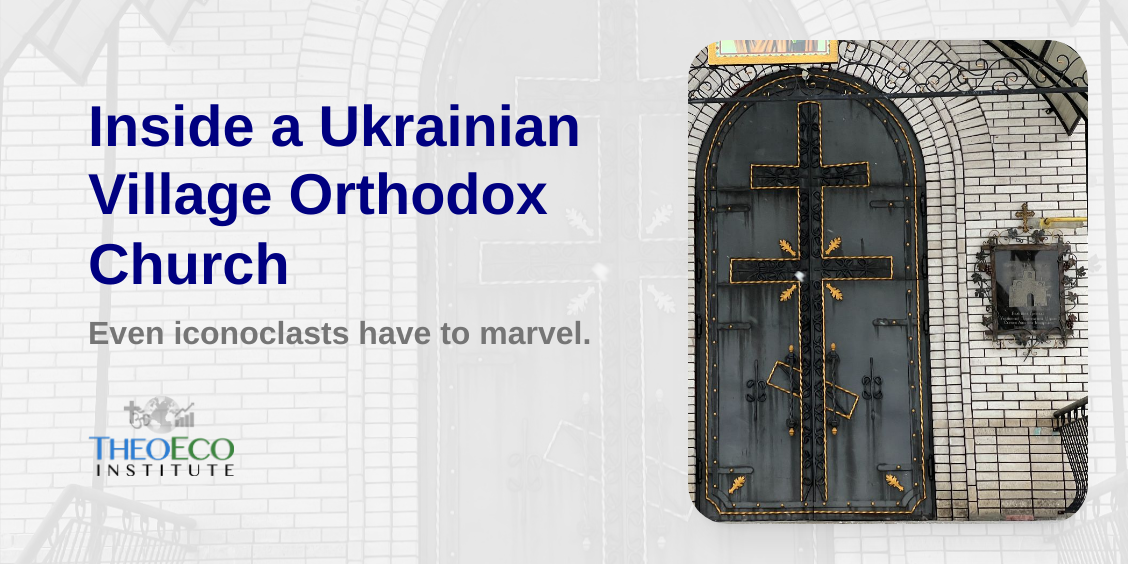
In this latest preview from the new film, we go into an Orthodox village church where Vinnytsia’s master blacksmith Roman created some of his best work, including the church’s steel door and candle case. We even get a tour of the inner sanctum behind the doors to the altar where we see the priest put away his robes. If you’ve never seen the inside of an Orthodox church they are wonders to behold with religious art from floor to ceiling. Everything is ornate and divinely inspired including the vestments/clothes, the bibles, the rugs, the ceilings, etc. Even iconoclasts have to marvel. 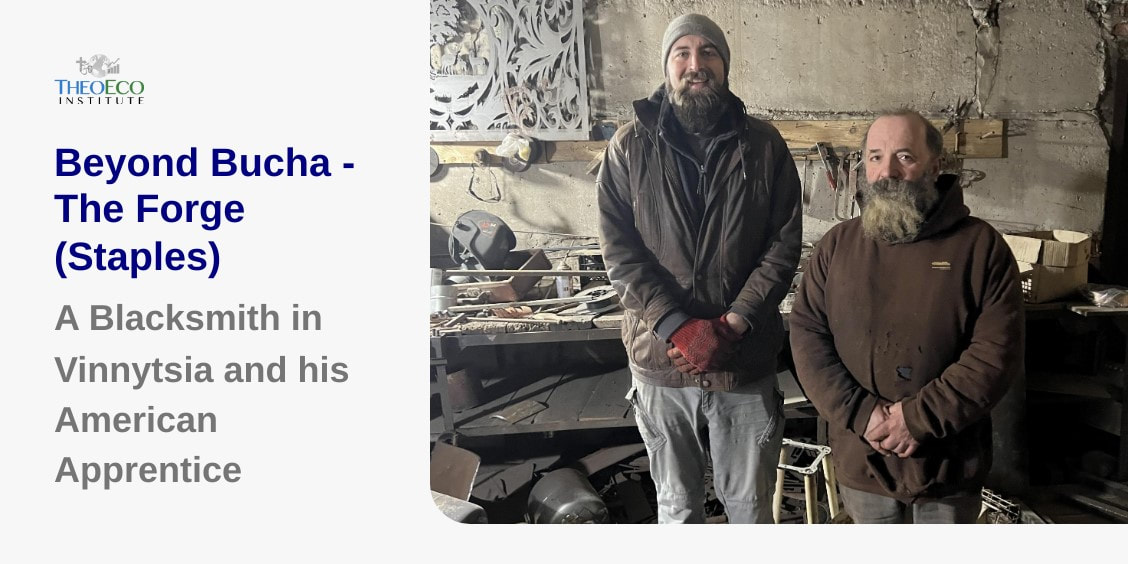 A Blacksmith in Vinnytsia and his American Apprentice By Steve Richards “Thank God for technology” is a statement that means so much in Ukraine right now. From naval drones that are helping feed the world - and Ukraine’s economy - by decimating Russia’s navy, to a blacksmith in Vinnytsia. Ukraine is a high-tech country in so many ways, and their innovations on the battlefield, using the mish mash of NATO weapons they’ve received, are schooling the west on how vulnerable Russia’s army is. But to a blacksmith technology means something else altogether as we see in this latest short video. Here we are introduced to “The Forge” where they make “staples” to keep trenches intact. To a blacksmith and soldiers on the frontline trying to survive the winter, technology comes down to bending and putting points on small sections of rebar through sheer force. The technology? A press and a gas fire. A big improvement over old blacksmithing technology which came down to a hammer, an anvil, and a bellows like we see in old westerns. As we see in the video, staples are produced by the hundreds by two men in close quarters surrounded by scrap metal and other tools. Work that at one time would take nine brawny guys pounding all day for the same output. By the way, this is the first bit of video – first of three from the “Forge” – that will find its way into our new documentary Beyond Bucha - the third film in the Trek to Bucha series. My friend Ben Hoerber from Lake Worth Beach, FL is blacksmith Roman’s apprentice of sorts. Ben packed up his van last summer and shipped it to Belgium whereupon he drove it to Ukraine to help in any ways possible. He had begun studying Ukrainian more than a year before as he knew where he had to be. In his quest to do all that he could to help soldiers on the front lines, he found Roman and the blacksmith’s family whom we briefly see in the video as well.
It was Ben who gave us the quote I began with. Turns out technology is relative but one thing’s for sure, Ukraine needs more of it – so much more. Which is one thing America has plenty of – and all Ukraine is asking for. High tech weapons and ammo for them. As President Zelensky is so famously remembered for: “I need ammunition, not a ride.” It is important to note that grass roots efforts throughout Ukraine is what is keeping Ukraine in the fight as much as anything else. Their Spirit is what makes them certain they will keep their independence. It is what has convinced the world that this David can take down their Goliath. To give an idea of how steadfast Ukrainians are: Roman has decided not to shave until they win. And a bottle of wine I brought as a gift to the host as we celebrated a village Christmas is still sitting on a shelf until victory. No matter how long it takes, the blacksmith and his family won’t be drinking. Nor will they be making anything but staples, furnaces, and other items for the front. As we’ll see in future videos these are artisans whose beautiful ironwork is seen throughout the area in local churches and elsewhere. But until the war is won they will be using their technology – and their labor - for the war effort. No more beautiful items until their work is done. All at no charge by the way. Like countless Ukrainians – and their supporters - inside and outside of Ukraine. 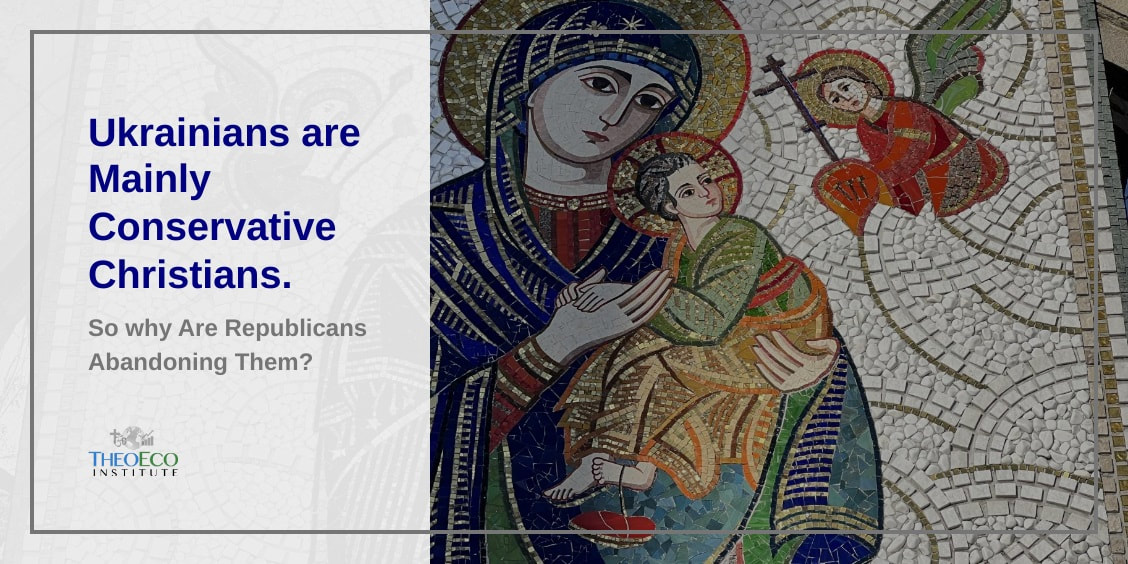 Anyone who knows Ukraine knows that Ukrainians are a pretty conservative bunch by and large. Home and family are primary as is a Judeo-Christian based society dating back to St. Andrew in the 1st Century, where lore has it he preached the gospel from the banks of the Dnieper River. Almost a millennium later in 988 AD Prince Volodymyr baptized his entire Kievan Rus empire two centuries before Moscow was a speck on a map.
So why do Christian Nationalists in the Republican Party treat Ukrainians so non-Christianly? Ukraine is largely populated by folks they would likely have a great affinity with if they knew them a little better. We have so much in common as I have tried to document in my two films since the full-scale invasion we are remembering on February 24th. This includes the innate desire to raise their kids just like we do, with nice homes, schools, soccer fields, freedom - and peace. Moms in both countries also share an incessant fear that their children might not make it home from school in the afternoon. In Ukraine the fear is of missile/drone attacks. In the USA it’s the threat of a school shooting. Christian Nationalists have adopted Donald Trump as their political standard bearer and have imbued him with a kind of zeal for one that is heaven sent. Like a modern-day King David they simply see an imperfect figure whose crimes are akin to David sending Bathsheba’s husband Uriah to the front lines in a battle with the Ammonites. This conveniently allows them to avoid having to noodle too hard on the well documented sexual deviancy of their candidate. Or explain it to their congregations. Unfortunately for Ukrainians – and those concerned with the security of the free world - these same Christian Nationalists in the House of Representatives are calling the shots on Ukraine aid. This group reads like a who’s who of those opposing Ukraine, Israel, and other foreign aid. It includes Lauren Boebert, Mo Brooks, Marjorie Taylor Greene, Matt Gaetz, Louis Gohmert, the list goes on with more than half the House Republican caucus according to a 2023 report by the Public Religion Research Institute and the Brookings Institution. Talk about the tail wagging the proverbial tail. Only 1 in 10 Americans identify themselves with this Theo-political moniker – and yet these self-identified Christian Nationalists are the ones holding things up. Trump controls these votes, including Mike Johnson’s. This is an autocratic theocracy evolving before our eyes. Our country is losing its separation of church and state without much notice or outcry. Putin is seen by many Christian Nationalists as worthy of their praise because of his cynical support of the Russian Orthodox Church. But then, so did Stalin once the Russian Church had its independent voice squashed and became a tool for Russian communists. It’s voice is still silent, hence the immergence of the Orthodox Church of Ukraine. Trump sees it in his best interests to oppose Ukraine funding though it is not clear why. Ukraine has always been at the heart of his political “black box”. Going back to his first presidential campaign with the hiring of Paul Manafort, the Hunter Biden/Burisma accusations, the Mueller Report findings, his first impeachment, the list goes on. It seems apparent that these politically motivated Christian Nationalists are veering towards a time when their churches might also lose their independent voice. It’s already happened to a large degree. Trump and the Christian Nationalists in the image of Putin and the Russian Orthodox Church? It boils down to irreligious autocrats blessed by subservient and opportunistic church leaders. Go figure. David loved God. He wrote Psalms, fought battles, repented, and prayed for forgiveness. Can you imagine our former president doing any of these things? 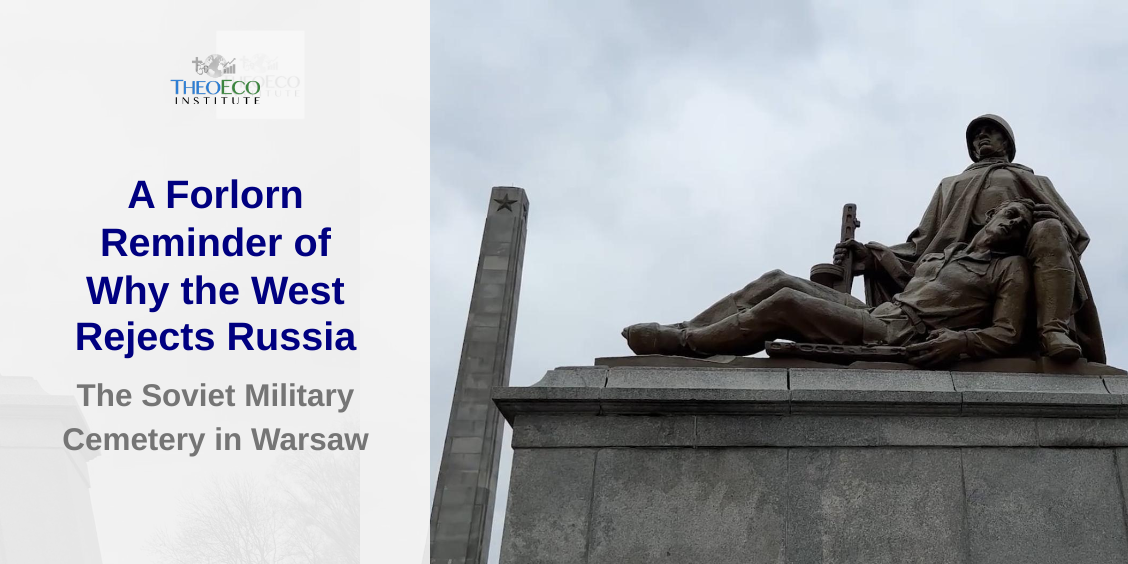
The Soviet Military Cemetery in Warsaw
BySteve Richards The day after Christmas I happened to be in Warsaw on my way to Ukraine and didn’t have much time. But I decided to visit a place that has haunted me since my first time there in March 2022. A place as cold and uncheery as I’ve ever witnessed. Soviet Realism is the manner of architecture and the monuments are reminders of Russia’s idealized history. It was meant to keep its former bloc in line including Poland and Ukraine. A place designed to mythologize the term: “Invincible Red Army”. Over two years Ukraine has certainly punctured that fairy tale. I’m talking about the Soviet Military Cemetery in Warsaw; final resting place to the ashes of 21,000 Soviet soldiers from the battle for Warsaw as the Red Army marched to Berlin. I went back to see if there was any more love for the place at Christmas, which might also reflect a bit of love for Russia. It was no different. Not a single wreath. No poinsettias. Not a single string of lights. Just a forlorn miserable place with an occasional straggler taking a shortcut home. I suppose the twilight added to the miserableness; it made the towering red starred obelisk doubly dark. This to me seems like a pretty good metaphor for how the former Soviet satellites – like Poland - are reacting to Russia’s war in Ukraine. They get what’s at stake.
A short video of the cemetery in March 2022. It looked identical at Christmas 2023.
Germany’s blitzkrieg through Poland in 1939 was the real beginning of WWII. It included a devastating siege and bombing of Warsaw – with the acquiescence of Stalin and his infamously dirty deal with Hitler to partition Poland with the Molotov-Ribbentrop Pact. Russia invaded from the east in September 1939, two weeks after Nazi Germany invaded from the west.
Which gets to the heart of why there is no love for the Russians…or their graveyard. Because the only reason the Red Army had to retake Warsaw in the first place was because Stalin gave it away. Of course, Hitler invaded Russia less than two years later after marching through the rest of Poland. Let’s face it, when you make deals with autocrats, dictators, and tyrants, be ready for them to turn on you. Something we need to be cognizant of in this election cycle. Zelensky recognizes this “Stalinesque” core in Putin. So does the West. None more so than the former Warsaw Pact countries that the Iron Curtain fell on at the end of the war giving rise to NATO and the Cold War. Czechoslovakia, East Germany, Estonia, Lithuania, Latvia, Hungary, and Poland are all former Soviet bloc countries that regained their independence with the fall of the Soviet Union some 30 plus years ago. None were forced to join. All of them have citizenries that wanted to be part of a free Europe, like Ukraine does. All of them had the choice to stick with Russia; none did. Poland is at the heart of NATO’s shield against Putin and Russia’s expansionist nightmare. They have a vibrant economy, a welcoming people, and are a primary conduit for arms and ammunition to Ukraine. They are a shining example right next door for Ukrainians and have much shared history over a millennium, not always on the same side. They are making sacrifices without whom Ukraine would have little chance to win. The Poles see it as an existential cause since a defeated Ukraine would mean a reconstituting, belligerent Soviet Union next door with a new Stalin in the form of Putin. This lays bare the possibility of millions more dead in Poland and Ukraine. What would prevent it? 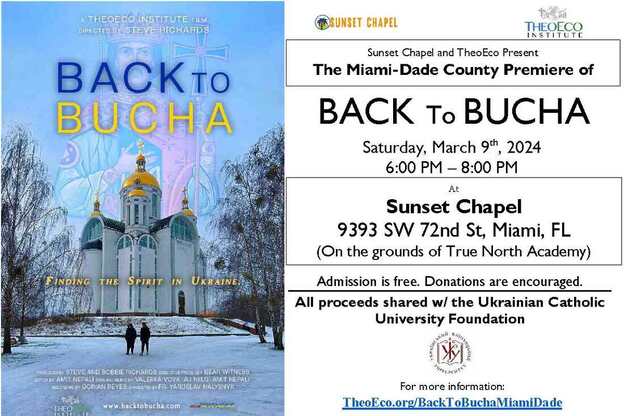
Ukraine’s Sprit On Full Display March 9thI am very pleased to announce the premiere screening of Back to Bucha in my hometown of Kendall, FL, just southwest of Miami proper. Technically, it is part of unincorporated Miami-Dade County, so we are calling this the Miami-Dade premiere; but I digress… The screening takes place on Saturday, March 9th beginning at 6:00 PM. With Q&A and a potential surprise or two, the entire event will be a two-hour affair. It takes place at: 
Sunset Chapel
9393 SW 72nd St, Miami, FL (On the grounds of True North Academy)
This is a donation driven event and all proceeds will be shared with the Ukrainian Catholic University (UCU) in Lviv through a donation to its USA based foundation.
This is our first screening/fundraiser for the university and is long overdue. It was the first place I went on my original trip to Ukraine when I arrived unannounced at the reception desk on March 31, 2022. I told the receptionist that I was there at the suggestion of Fr. Yaroslav of Christ the King Ukrainian Catholic Church (UCC) in Boston, who had told me that if I made it to Lviv I should stop in. As the Spirit would have it, the next day I was shooting interviews and staying at the UCU Inn where I experienced my first air raid sirens and visits to bomb shelters. Several days later my plans had been turned upside down with the retreat of the Russians from Bucha and the other suburbs of Kyiv, allowing me to go there. The rest, as they say, is history. Ukrainian Catholic University (UCU) in Lviv (theoeco.org) UCU is a renowned educational institution in Ukraine known to be free of corruption and tops academically. In other words, you can’t buy your way in. It is a beacon of values we can all recognize, and my time there made me understand Ukrainians are just like us. Especially the students and teachers. Following is a 12-minute video shot I shot there in 2022:
Ukrainian Catholic University in Lviv, Ukraine - April 1, 2022
Even though Back to Bucha is a secular film one can’t help but recognize the Spirit imbued within it where so many of the interviewees actually mention their beliefs, which to me sounds like I’m listening to folks I might meet in Anywhere, USA. Especially moms who have moved back so they can raise their children, in their own homes, in their own country.
People like those at Sunset Chapel. When I first stopped in to see my good friend Jovy play with the band on a Sunday before Covid I saw it was as welcoming a place as I’ve ever been on a Sunday. Pastor Russ immediately affected me in the manner all great preachers do. Plus the sanctuary was filled with flags from around the world, including Ukraine’s, and when I saw the big screen I knew I had to ask. It will be a great place to watch the film.
To register go to the event page at:
https://www.TheoEco.org/BackToBuchaMiamiDade 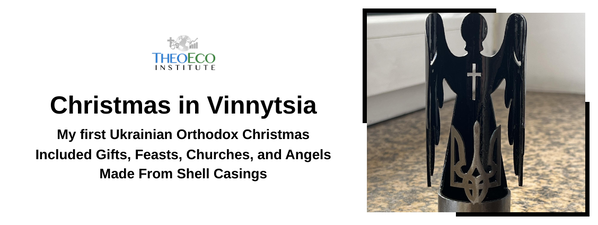
My first Ukrainian Orthodox Christmas Included Gifts, Feasts, Churches, and Angels Made From Shell Casings
Yes, I know; you thought Christmas was over two weeks ago. And they were certainly celebrating the occasion around here then. But Orthodox Christmas was yesterday, January 7th and the celebration goes on. The trees are still up, and the store decorations are still out. Back to Bucha’s Ukrainian Premiere on Friday included a ceremonial check presentation from the October 1st screening in Boston at the St. Andrew’s Ukrainian Orthodox Church. The next day had me using the funds to personally buy a new video camera and powered speaker for the local children’s center which replaced equipment pilfered by Russian soldiers during the occupation. 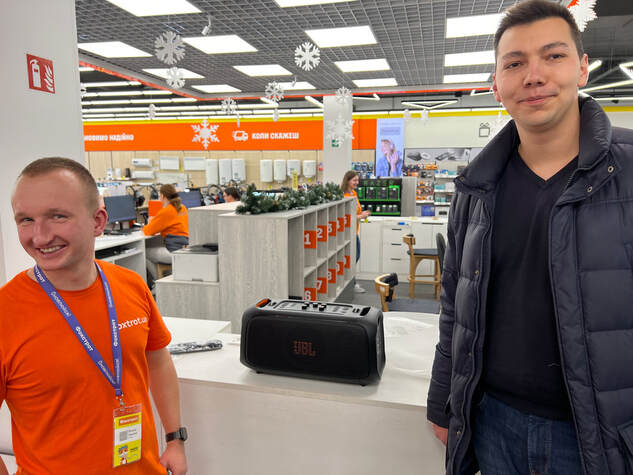
Liubimyr Janov (Head of the Bucha Youth Council) and the Foxtrot store clerk in Bucha picking up a speaker. The next stop was picking up the camera.
Then, I was on my way to Vinnytsia with my friend Ben to a small village outside of the city and a Christmas Eve feast with a blacksmith that Ben is working with, and his family. They also celebrated on the 25th with a more traditional western X-Mas when they all watched Home Alone together, a holiday favorite here too!
I’m keeping the names and exact locations a bit vague just in case anyone confuses their humanitarian work with something more offensive in nature. We had a Christmas Eve feast that included hot borsht and an assortment of meatless dishes. 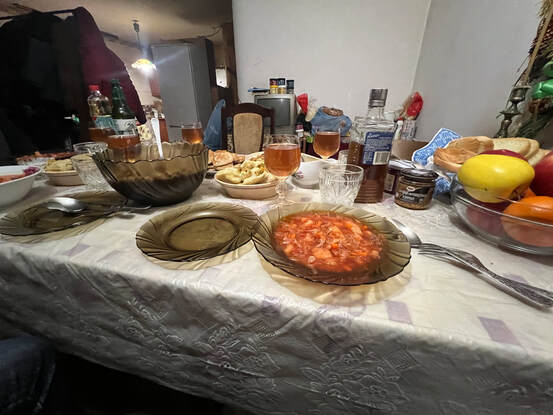
Our Christmas Eve meatless feast.
Then after some conversation with Ben providing translations - and a mammoth log thrown in the furnace – it was time for bed. The next morning, we had a breakfast of nothing but meat dishes it seemed. 5761
Then outside to the “forge” a few steps away to make “staples” and “furnaces” for the front lines. The staples are used to keep logs together inside trenches and the small furnaces they make out of scrap metal are used to keep soldiers warm. A difficult task when the thermometer will drop to -3F (-21C) tonight where I am in Lviv. This kind of volunteering is happening all over Ukraine to support the war effort in a myriad of ways. The blacksmith and Ben receive no remuneration for this work. 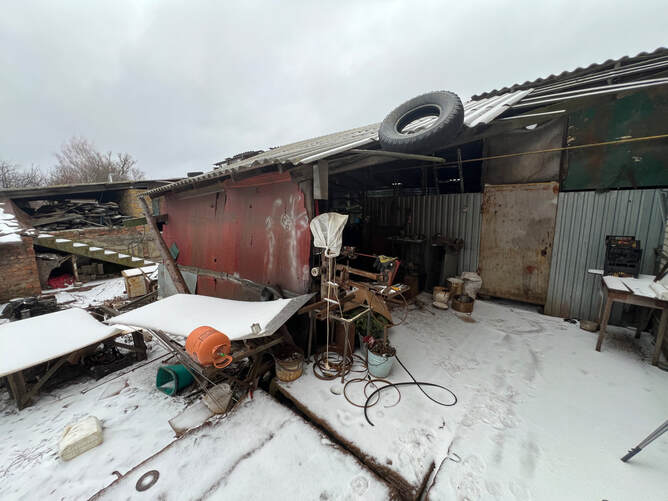
The "Forge" blacksmith shop.
Before the blacksmith started making things for the soldiers, he made artisan craftsman work including churches nearby. He still creates artistic works like angel candle holders out of 30mm spent artillery casings. Before the war he also made metalwork for local Orthodox churches like those we visited on our way into the city.
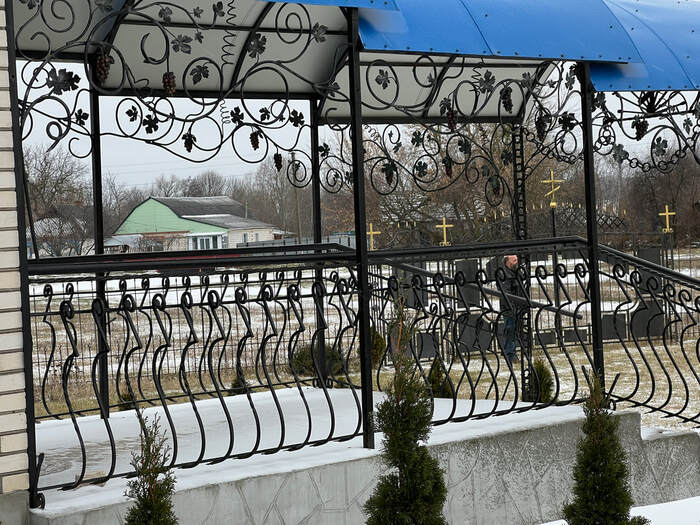
Metalwork outside the blacksmith's village Orthodox Church
It was here that we met three village ladies caroling from house to house in the morning hours. I had heard to look out for these caroling groups in Ukraine but figured with the bombings of Kyiv I would be out of luck. These ladies definitely made my trip!
Then back into Ben’s van (he brought it with him from the USA when he came five months ago) on snowy streets to the Transfiguration Cathedral in town.
We then got a tour of the church and also witnessed the funeral for a Ukrainian soldier there. They average about one per day we were told. After a promise to come back I was promised a proper interview with the archdeacon host – including a discussion of their rather recent break from the Moscow Patriarchate and a Metropolitan still under house arrest. 5822 5834 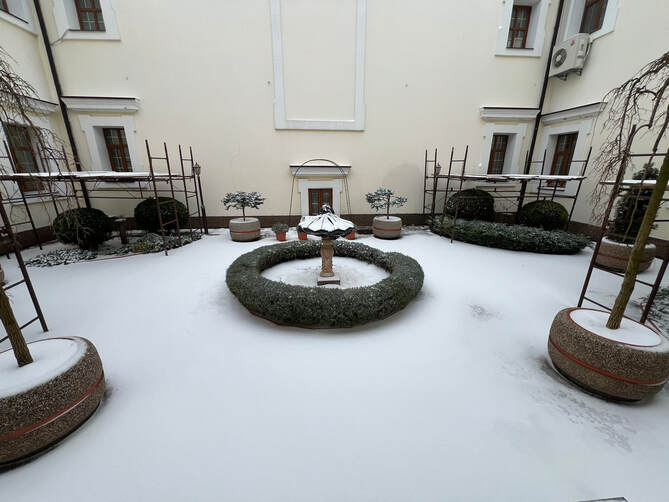
Meditation garden within the cathedral
All this in less than 24 hours. Then we piled back into Ben’s van and off to the train station for the next leg of my journey home.
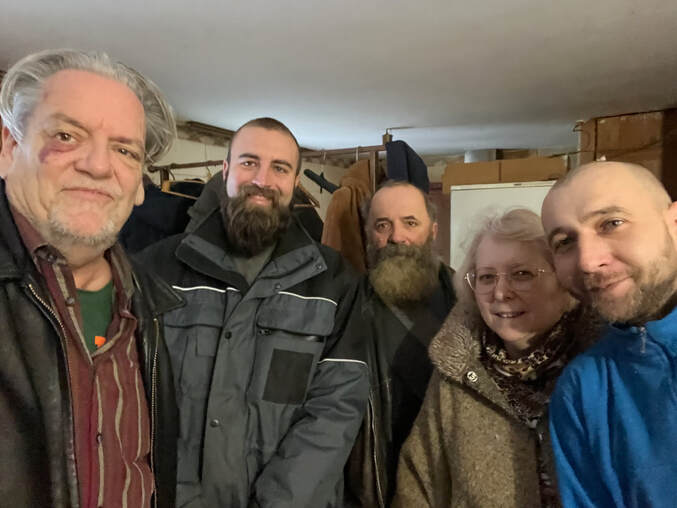
Steve, Ben, the blacksmith, and his family.
|
Archives
June 2024
Categories
All
|

 RSS Feed
TheoEco Institute is a 501(c)(3) nonprofit organization. Contributions to TheoEco in the United States are tax exempt to the extent provided by law.